.svg)

Subject-To vs Loan Assumption: Why 139% More Buyers Choose the Safer Path
Subject-to deals skip lender approval and carry due-on-sale risk. How they compare with a formal loan assumption, and when assumption is the safer path.
Key takeaways
Subject-To Real Estate: How It Works, Risks, and When Assumption Is Better
Executive Summary
- Direct answer: A subject-to mortgage lets a buyer take title to a property while the seller's loan stays in the seller's name, with no lender approval and no formal assumption. It's not illegal, but it operates in a legal gray area that exposes both parties to real consequences, especially the due-on-sale clause.
- Key insight: The risk of due-on-sale enforcement is higher now than at any point in the past 15 years. With new mortgage rates averaging 6.16% and 20% of outstanding mortgages locked below 3%, lenders have a financial incentive to call loans due and replace them with higher-rate originations.
- Assumable.io perspective: Our analysis of 312,367 assumable listings across all 50 states shows that buyers who formally assume a mortgage save an average of $1,187/month compared to today's rates. That's $427,305 in lifetime interest savings, achieved through a lender-approved process with no gray area.
- Actionable takeaway: For most buyers, a formal loan assumption provides the same rate advantage as subject-to with full lender protection, seller release from liability, and zero due-on-sale risk. Search assumable homes in your area to find your savings.
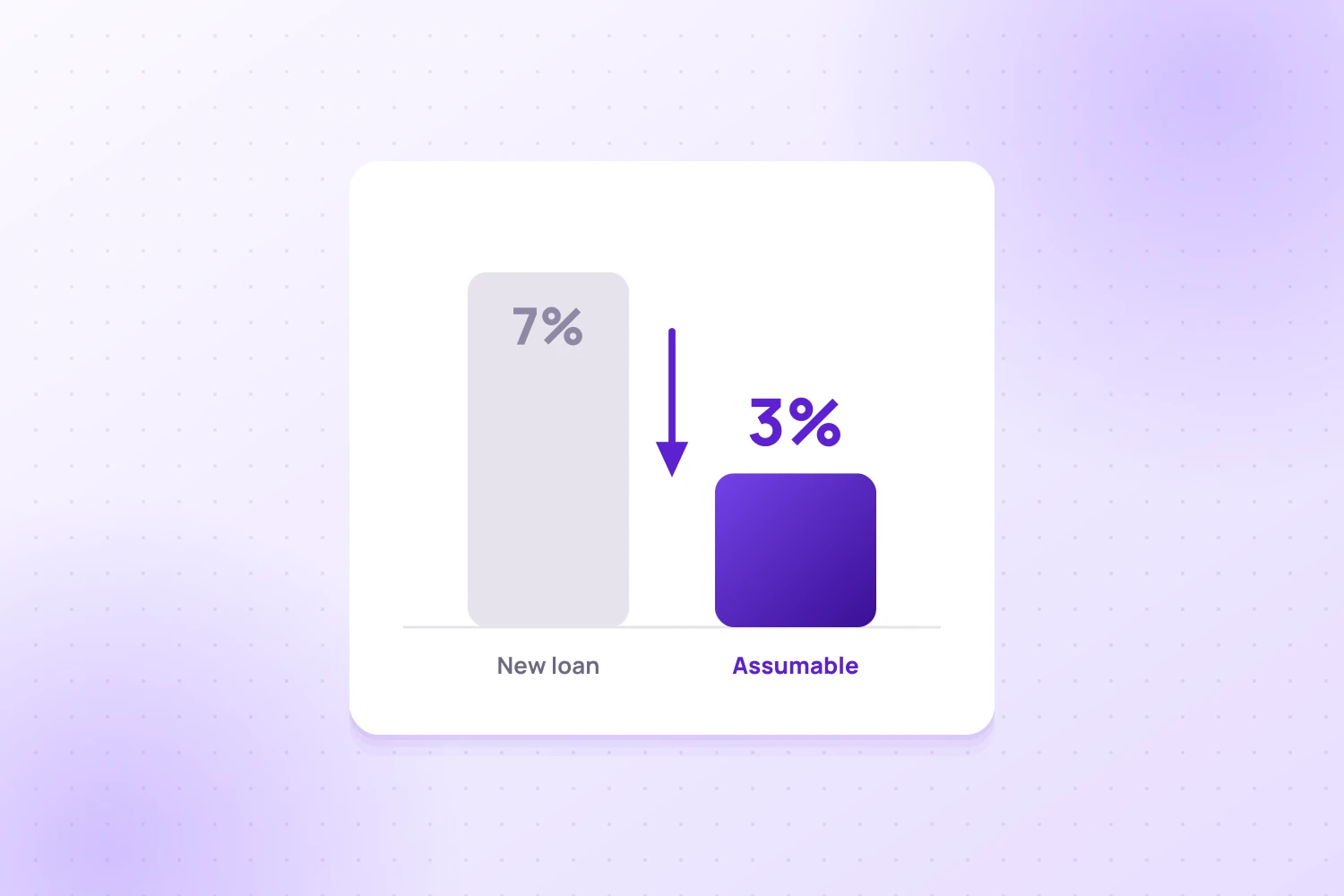
A home with a 3.2% mortgage attached just hit the market. The subject-to real estate strategy says you can grab that rate without qualifying for a new loan. At today's 30-year fixed rate of 5.98% (Freddie Mac PMMS, February 26, 2026), that gap translates to roughly $350/month on a $400,000 home, or $125,700 over the life of the loan, according to the Bipartisan Policy Center. The math is magnetic. But there are two paths to accessing that old rate, and one carries serious risk most content creators won't mention. The other is lender-approved and growing 139% year over year.
What Is a Subject-To Mortgage?
Purchasing a property "subject to" the existing mortgage means the buyer receives the deed (legal ownership) while the seller's mortgage stays in the seller's name. The buyer makes the payments. The lender is not involved and does not approve the transfer. This is not the same as assuming the loan.
Why Subject-To Appeals to Investors
The appeal is straightforward. No lender qualification process. No new loan origination. No credit checks or income verification. Closings happen in one to two weeks instead of 45 to 90 days.
For context, the Bipartisan Policy Center's January 2026 analysis found that 20% of outstanding mortgages carry rates below 3%, the average outstanding rate is 4.4%, and new mortgage originations average 6.16%. That spread is what makes creative financing attractive. When the rate gap is this wide, the motivation to access an existing low rate is real.
Common Subject-To Structures
You might see this called a "subject 2 mortgage" or "sub-to deal" in investor communities. There are three primary structures:
- Straight subject-to: The buyer simply takes over payments on the existing mortgage. No additional financing involved.
- Subject-to with seller carryback: The seller holds a second note covering the equity above the mortgage balance.
- Wrap-around mortgage: The buyer's new note "wraps" the existing mortgage at a higher rate, with the buyer pocketing the interest spread.
As U.S. News & World Report has noted, "Subject-to transactions are technically legal, but they operate in a gray area." That gray area is what separates subject-to from a formal assumption, and it's the reason this strategy requires more scrutiny than most online courses provide.
How a Subject-To Deal Works, Step by Step
Understanding what subject-to means is straightforward. Understanding how these deals actually work, and who holds the risk, is where it gets complicated.
Step 1: Seller and Buyer Negotiate Terms
The buyer identifies a motivated seller, often someone in financial distress, relocating, or unable to sell through traditional channels. They agree on a purchase price, which may differ from the remaining mortgage balance. The difference (the seller's equity) is handled through a down payment, a seller carryback note, or another arrangement.
Step 2: The Deed Transfers, but the Mortgage Doesn't
The seller signs the property deed over to the buyer. But the mortgage stays in the seller's name. This is the crux of the subject-to real estate strategy: legal ownership transfers while financial liability does not. The buyer takes title "subject to the existing mortgage." The lender is not notified and does not consent.
Step 3: The Buyer Makes Payments on the Seller's Loan
Payments go to the existing lender, typically routed through a third-party escrow or servicing company. Reputable subject-to deals use a servicer so the seller can verify payments are being made. But the loan statements still go to the seller. The seller still shows this debt on their credit report.
The existing mortgage remains in the seller's name, which impacts their debt-to-income ratio and ability to qualify for a new loan. Consistent payments by the buyer, documented by a third-party servicer, can sometimes offset DTI concerns (similar to how rental income is treated). But this workaround isn't guaranteed.
Step 4: The Exit Strategy Question
The subject-to loan arrangement continues until... what? Typical exit strategies include the buyer refinancing into their own loan (if they qualify or rates drop), the buyer selling the property, or the buyer paying off the loan. There's no set timeline. Some arrangements run for years.
Documentation Involved
- Purchase and sale agreement with subject-to language
- Warranty deed or grant deed
- Power of attorney (sometimes, to allow the buyer to deal with the lender on insurance and escrow matters)
- Escrow/servicing agreement for payment routing
- Title insurance (which can be difficult to obtain; some title companies won't insure subject-to deals)
Arranging homeowner's insurance when the loan is in the seller's name but the buyer owns the property creates a mismatch. Some insurers flag this. It's not a throwaway detail. It's a practical friction point that affects the deal's viability.
Notice what's missing from every step? The lender. In a subject-to deal, the institution that holds the financial risk is deliberately kept in the dark. That's the fundamental tension, and it's the fundamental difference between subject-to and mortgage assumption.
On paper, subject-to looks elegant: fast closing, low cost, below-market rate. But there's a reason mortgage contracts include a clause specifically designed to prevent what we just described.
The Risks of Buying Subject-To (What the Gurus Don't Emphasize)
The Due-on-Sale Clause Is Federal Law, Not a Suggestion
A due-on-sale clause is a provision in a mortgage that allows the lender to demand the full remaining balance be repaid immediately if the property is sold or transferred without lender consent. Congress made these clauses federally enforceable through the Garn-St. Germain Depository Institutions Act of 1982 (12 U.S.C. § 1701j-3). This isn't a lender preference. It's backed by federal statute.
Fannie Mae's Servicing Guide D1-4.1-05 makes this explicit: "the servicer must accelerate the debt" unless the transfer qualifies as an exempt transaction. That word "must" matters. Fannie Mae doesn't tell servicers they may enforce it. They tell servicers they're obligated to enforce it.
Historically, lenders rarely invoked the due-on-sale clause because rates were declining. Calling a 5% loan when new loans were at 3% made no business sense. That math has flipped. With new mortgage rates near 6% and millions of outstanding loans locked at 2% to 4%, lenders now have a clear financial incentive to call loans due and replace them with higher-rate originations. The risk of enforcement is higher now than at any point in the past 15 years.
It's not illegal to violate a due-on-sale clause. There's no criminal statute. But the consequences are severe: the lender can demand immediate full repayment, and if the buyer can't pay, the lender can initiate foreclosure.
Seller Credit Exposure
If the buyer fails to make mortgage payments, it negatively impacts the seller's credit rating, damaging their ability to get favorable terms on future borrowing. The seller has no control over a property they no longer own, yet their financial life is tied to someone else's payment behavior.
The seller's DTI is impacted for as long as the mortgage remains in their name, which can prevent them from buying a home of their own. If the seller files for bankruptcy, the mortgage could be affected even if the buyer holds legal title. This underreported risk means the bankruptcy of a party who no longer lives in or controls the property can still cloud the title and the loan.
Insurance and Title Complications
Homeowner's insurance when the loan is in one name and ownership is in another creates friction. Some carriers won't write the policy. Others require creative structuring that may not survive a claims process.
Title insurance is equally problematic. Some title companies refuse to insure subject-to transactions. Without title insurance, the buyer is exposed to liens, encumbrances, or defects that could undermine their ownership entirely.
Regulatory Direction: More Transparency, Not Less
No Truth in Lending Act (TILA) protections apply to subject-to deals because there's no new loan origination. The CFPB has introduced new compliance rules in 2025 focused on seller financing transparency, including requirements around interest rate disclosure, repayment schedules, and consumer protections. The regulatory environment is tightening.
FinCEN's Residential Real Estate Rule, effective March 1, 2026 (after a delay from December 2025 per FinCEN's September 30, 2025 exemptive relief), expands nationwide reporting requirements for certain real estate transactions. This replaces the temporary Geographic Targeting Orders in place since 2016 and signals a federal push toward more transparency in real estate transfers. Subject-to deals, which depend on opacity, are swimming against this regulatory current.
We're not saying subject-to is a scam. We're saying the risk profile has fundamentally changed since 2021, and most of the content teaching subject-to was written (or filmed) when rates were at historic lows and lender enforcement was rare. The world is different now.
Subject-To vs. Loan Assumption: The Critical Differences
Both subject-to and loan assumption let a buyer access an existing mortgage's interest rate. The similarity ends there. In a subject-to deal, the lender doesn't know. In an assumption, the lender approves the transfer, underwrites the new buyer, and releases the seller from liability. One is a workaround. The other is a standard, lender-sanctioned process.
FactorSubject-ToLoan AssumptionLender involvementNone; lender is bypassed entirelyFull lender approval requiredDue-on-sale riskFull risk; lender can call loan due at any timeEliminated; lender consents to the transferSeller liabilitySeller stays on the loan (credit and DTI impacted)Seller receives release of liabilityBuyer qualificationNo formal qualification requiredLender underwrites buyer (credit, income, DTI)Closing timeline1–2 weeks60–90 days (VA mandates 45-day processing)Legal standingGray area; violates the mortgage contractStandard, lender-approved processEligible loan typesAny loan (but triggers due-on-sale on conventional)FHA, VA, USDA (government-backed loans)InsuranceComplicated; loan and ownership names don't matchStandard; loan transfers to buyer's nameRate savings accessYes (with risk)Yes (with protection)Available inventoryAny home with a mortgage (theoretical)~12 million homes (23% of outstanding mortgages)
Seller Release Changes Everything
In an assumption, the seller gets a release of liability. Their name comes off the loan. Their DTI clears. Their credit is no longer tied to a property someone else controls. In subject-to, the seller has none of this. For sellers, this is the single most important difference.
Due-on-Sale Risk Is Eliminated, Not Managed
Assumption is lender-sanctioned. The due-on-sale clause is satisfied because the lender approves the transfer. No gray area. No risk of a demand for immediate full repayment. Subject-to "manages" the risk by hoping the lender doesn't notice. Assumption eliminates it entirely.
Buyer Qualification Is a Feature, Not a Bug
Subject-to requires no qualification, which sounds appealing but means no guardrails. Assumption requires lender underwriting, which protects everyone: the buyer proves they can afford the payment, the seller gets a clean exit, the lender maintains a performing loan. U.S. News & World Report recommends it directly: "Buyers should seek out an assumable mortgage where they fully qualify for the mortgage instead of a subject-to transaction."
The Growth and Policy Trajectory
Mortgage assumptions grew 139% from 2022 to 2023, according to the Bipartisan Policy Center's January 2026 analysis. About 6,000 assumptions completed in 2023. Still small in absolute terms, but the trajectory is steep and moving in one direction.
VA Circular 26-23-27 (December 2023) mandated servicers process VA loan assumptions within 45 days. FHA servicers must complete creditworthiness review within 45 days per HUD Handbook 4155.1. Previously, these could drag on four to six months. In practice, total timelines from offer to close run 60 to 90 days. Yes, that's slower than subject-to's one to two weeks. But it's the difference between a process that might blow up and one designed to close.
Federal policy is moving in this direction. The current administration has said it's considering expanding access to assumable mortgages and developing portable mortgages. FHFA Director William Pulte posted on X that the agency is "actively evaluating" portable mortgage programs. The infrastructure is catching up to the demand.
Assumable.io's analysis of 312,367 assumable homes listed for sale from 2023 to 2025 found that buyers who assume a mortgage save an average of $1,187/month compared to buying at today's rates. That's $14,244/year, or $427,305 in total interest savings over 30 years. You can estimate your personal savings with the Assumable Mortgage Calculator.
When Subject-To Makes Sense, and When It Doesn't
None of this means subject-to is always wrong. There are specific situations where it's the practical choice, or the only one available.
Scenarios Where Subject-To Can Work
- Pre-foreclosure rescue: A seller facing foreclosure may not have time for a 60-to-90-day assumption process. A subject-to deal can stop foreclosure proceedings and protect the seller's credit while giving the buyer an opportunity. In distressed contexts, speed matters more than lender approval. Both parties understand the trade-offs.
- Investor-to-investor deals: Experienced investors on both sides of the transaction, working with real estate attorneys, structuring proper escrow servicing. This risk profile is fundamentally different from a first-time buyer learning subject 2 financing from a TikTok video. Sophistication of parties matters.
- Non-qualifying buyer on a short-term hold: A buyer who can't currently qualify for a formal assumption but plans to refinance within 12 to 24 months may use subject-to as a bridge. The risk is contained by the short timeline, though it still carries due-on-sale exposure.
When It Doesn't Make Sense
SituationWhy Subject-To Is the Wrong ToolPrimary-residence buyer who qualifies for conventional lending or assumptionNo reason to accept subject-to risk when a lender-approved path existsSeller doesn't fully understand they remain liable on the loanThis is the ethical line, and it's crossed more often than the guru ecosystem acknowledgesDeal structured without a real estate attorney reviewing documentationThe legal complexity demands professional oversight; cutting corners increases risk for everyone
For most homebuyers, especially those purchasing a primary residence, a formal loan assumption offers the same rate advantage with lender protection, seller release, and regulatory legitimacy. Subject-to is a tool, not the default.
How to Find Assumable Mortgages (The Safer Path to a Low Rate)
If you're drawn to the idea of accessing an existing low-rate mortgage but want to do it through a process that protects everyone involved, here's where to start.
The Inventory Is Real and Massive
According to NPR's February 2026 reporting, about 6 million homes in the U.S. have both an assumable mortgage and an interest rate below 5%. These are FHA, VA, and USDA loans: government-backed and assumable by design. About 23% of the 52 million outstanding mortgages are federally backed, representing roughly 12 million assumable loans nationwide.
What Assumable.io Offers
Assumable.io is the first nationwide platform dedicated to helping buyers find and close on assumable mortgages. The team has analyzed 312,367 assumable homes listed for sale from 2023 to 2025 across all 50 states and thousands of cities.
- Detailed mortgage data on every listing: Rate, remaining balance, loan type, estimated monthly payment
- Assumable Mortgage Calculator: Estimate your personal savings based on today's rates versus the existing loan
- Agent matching: Connect with professionals who understand the assumption process
- Educational guides: Step-by-step resources for VA assumptions and FHA assumptions
The Process Is Getting Better
VA and FHA have both mandated 45-day processing windows. Federal policy is actively moving toward making assumptions easier. Assumption volume grew 139% from 2022 to 2023 and continues accelerating. The infrastructure is catching up to the demand.
You don't need to learn subject-to strategies from YouTube. You need a search engine, a calculator, and an agent who knows the process. Search assumable homes in your area to see what's available today.
Frequently Asked Questions About Subject-To Mortgages
What is a subject-to mortgage in real estate?
A subject-to mortgage is a transaction where the buyer takes legal title to a property while the seller's existing mortgage stays in the seller's name. The buyer makes the payments on the seller's loan, but the lender is not involved and does not approve the transfer. It's a form of creative financing (sometimes written as "subject 2 mortgage" in investor forums) that's technically legal but triggers the due-on-sale clause in most mortgage contracts.
Is buying a house subject-to legal?
Buying subject-to is not illegal. There's no federal or state criminal statute that prohibits it. However, it violates the due-on-sale clause in the mortgage contract, which is federally enforceable under the Garn-St. Germain Act of 1982 (12 U.S.C. § 1701j-3). If the lender discovers the transfer, they can demand full repayment of the remaining loan balance immediately.
What is the due-on-sale clause?
A due-on-sale clause is a provision in a mortgage or promissory note that gives the lender the right to demand the full remaining balance if the property is sold or transferred without lender consent. Congress made these clauses federally enforceable in 1982 through the Garn-St. Germain Depository Institutions Act. Fannie Mae's servicing guidelines (D1-4.1-05) require servicers to accelerate the debt when an unauthorized transfer occurs.
What is the difference between subject-to and loan assumption?
In a subject-to deal, the buyer takes ownership of the property without lender approval, and the seller remains liable on the loan. In a loan assumption, the lender underwrites and approves the new buyer, transfers the loan into the buyer's name, and releases the seller from liability. Assumptions eliminate due-on-sale risk and are available on FHA, VA, and USDA loans. Subject-to bypasses the lender entirely and carries the risk of the loan being called due.
What are the risks of a subject-to deal?
The primary risks include: the lender invoking the due-on-sale clause and demanding full repayment, the seller's credit being damaged if the buyer stops making payments, complications with homeowner's insurance when the loan and ownership names don't match, title insurance challenges, and increasing federal regulatory scrutiny of real estate transfers. The risk of due-on-sale enforcement has grown since 2021 because lenders now have financial incentive to replace low-rate loans with higher-rate originations.
Is loan assumption better than subject-to?
For most homebuyers, yes. Loan assumption provides the same benefit (access to an existing below-market interest rate) with lender approval, seller release from liability, and no due-on-sale risk. Assumptions are available on about 12 million federally backed mortgages nationwide. According to Assumable.io's analysis of 312,367 listings, buyers who assume a mortgage save an average of $1,187 per month compared to today's rates.
How long does a loan assumption take?
The VA mandates servicers process assumptions within 45 days (per VA Circular 26-23-27). FHA servicers must complete creditworthiness review within 45 days (per HUD Handbook 4155.1). Total timelines from offer to close typically run 60 to 90 days. While slower than a subject-to closing of one to two weeks, the process includes full lender approval and legal transfer of the loan.
Key Takeaways
The spread between existing mortgage rates and new origination rates is the widest it's been in decades. That's created legitimate demand for ways to access old rates. Subject-to is one path: faster, riskier, unregulated. Assumption is the other: slower, safer, lender-sanctioned, and growing 139% year over year.
The question isn't whether you can access a 3% mortgage in a 6% world. You can. Roughly 6 million homes have one. The question is whether you do it in a way that protects you, the seller, and the deal itself. That's the difference between subject-to and assumption. And that's what Assumable.io was built to help you find.