.svg)

Portable Mortgages in Late 2026: Do They Exist Yet?
Portable mortgages don't yet exist for conventional U.S. loans in late 2026; the MOVE Act remains stalled in committee. However, FHA, VA, and USDA mortgages are assumable now, letting buyers take over sellers' low rates immediately, unlike pending portable mortgage legislation.
Key takeaways
Can You Take Your 3% Rate With You? Where Portable Mortgages Stand in Late 2026
Executive Summary
- Direct answer: Portable mortgages are not available for conventional loans in the United States as of late 2026. The MOVE Act (H.R. 10028) proposes creating them, but the bill has not advanced beyond its initial committee referral.
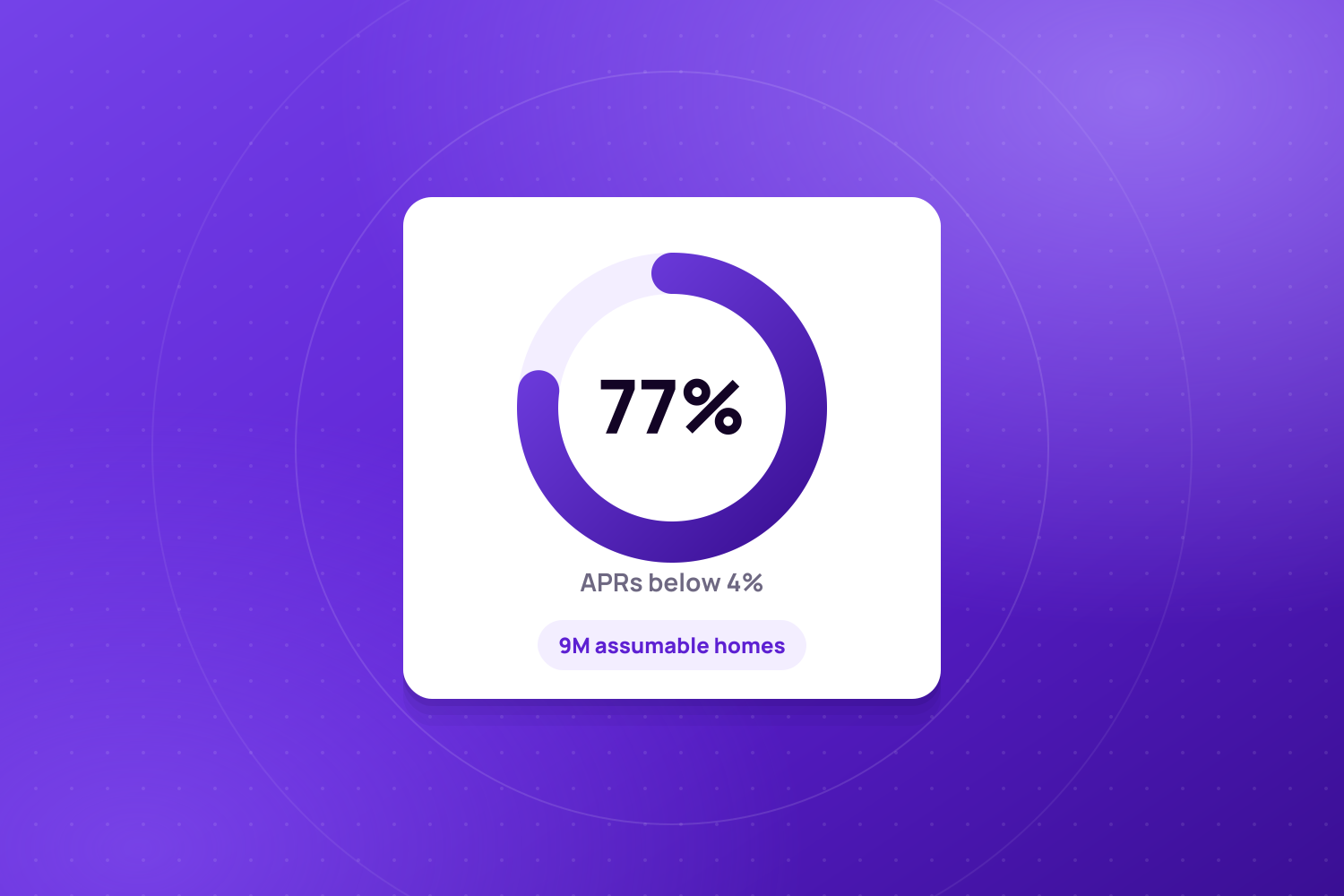
- Key insight: FHFA Director Bill Pulte has said the GSEs are "evaluating" portable mortgages, but nearly a year of evaluation has produced no pilot program, no timeline, and no product. Meanwhile, 49.9% of outstanding U.S. mortgages carry a rate at or below 4%, and FHFA research found each 1-point rate gap reduces selling probability by 18.1%.
- Assumable.io perspective: We built Assumable.io, the first-of-its-kind marketplace for assumable mortgages, around the one low-rate transfer mechanism that actually works today. We don't just analyze this space. We run the marketplace for it.
- Actionable takeaway: FHA, VA, and USDA loans are assumable right now. For homeowners holding these loans, that below-market rate is already a transferable asset. Most don't know it.
Roughly half of all outstanding U.S. mortgages have a rate at or below 4%. The 30-year fixed hit 7.28% on October 1, 2026. That spread is why people aren't selling. Not stubbornness, just math. Portable mortgages have been proposed in Congress, FHFA is "evaluating" the concept, and none of it exists yet. But one low-rate transfer mechanism does work today.
Are portable mortgages available in the United States? No. As of late 2026, portable mortgages are not available for conventional loans in the United States. The MOVE Act (H.R. 10028), introduced August 3, 2026, proposes requiring Fannie Mae and Freddie Mac to purchase and securitize portable mortgages, but the bill has not moved beyond its initial referral to the House Financial Services Committee. FHFA Director Bill Pulte has said the GSEs are "evaluating" the concept, with no launch date announced. Assumable mortgages, available today on FHA, VA, and USDA loans, are the only existing way to transfer a below-market rate from one party to another.
What the MOVE Act (H.R. 10028) Would Do
The Bill's Core Mechanism
Rep. Thomas Kean Jr. (R-NJ-7) introduced H.R. 10028 on August 3, 2026. It was referred that same day to the House Committee on Financial Services. Those are the only two recorded actions.
The operative language from the bill text spells out the mechanism: "not later than 180 days after the date of the enactment of this section, begin purchasing and securitizing conventional mortgages under which the mortgagor is permitted by mortgagee to transfer the interest rate, terms and balance of such mortgage to a new property within 90 days of selling the property originally securing such mortgage."
What the Bill Does Not Do
Read that clause again. "Permitted by mortgagee" is doing a lot of work. The bill does not require any lender to offer a portable mortgage. The lender still decides. What the bill does is ensure the secondary market will accept the loan if a lender chooses to write one.
That's actually the right lever to pull. Lenders don't originate products they can't sell on the secondary market. But the bill leaves significant gaps unfilled:
- No LTV rules for the new property
- No servicing fee structure
- No guidance for what happens when the new home costs significantly more than the old one
- No framework for retrofitting existing loans
Another Bill, Even Earlier
H.R. 10028 isn't the only portable mortgage bill in this Congress. H.R. 7754, the "Take Your Rate Act," was introduced March 3, 2026 by Rep. Tom Barrett (R-MI). That bill asks only for a feasibility study. Both are in committee. Neither has had a hearing, markup, or vote. The policy conversation is at the study phase, not the implementation phase.
Where It Stands Right Now
Two Actions, Nothing More
As of the most recent congressional record, H.R. 10028 has two logged actions: introduction and referral to committee. GovTrack notes the bill is in the first stage of the legislative process, where most bills remain. It is bill number 10,028 of the current Congress. That number is its own context.
Jake Krimmel, senior economist at Realtor.com, has characterized portable mortgages as "a brute-force attempt to 'solve' the lock-in effect." Whether you agree with that framing or not, it captures the scale of what the bill is trying to address and the distance between the proposal and a working product.
The Retroactivity Problem
Here is the misunderstanding to correct directly: the 3% mortgage sitting in a homeowner's drawer right now cannot become portable under the MOVE Act. The bill applies to future loans with portability written in at origination.
The Urban Institute made this point definitively in December 2025: "Existing mortgages can't be amended, so we can't retroactively make them assumable or portable now. This means all those awesome 2-4% mortgages won't magically get new features. The investors of the loans would never go for it."
What FHFA Has Said
Pulte's Statements
FHFA Director Bill Pulte posted on X that the GSEs are "evaluating how to do assumable or portable mortgages, in a safe and sound manner." He subsequently reiterated: "We are actively evaluating portable mortgages." Both statements were made on X. No timeline was attached to either.
What "Evaluating" Means in Practice
"Evaluating" is not "launching." The National Association of Mortgage Underwriters noted Pulte emphasized that any new program will need to maintain safe-and-sound standards. Industry analysts treat the remarks as exploratory, not imminent policy. No pilot program has been announced.
Pulte's first statement on the topic dates to approximately November 2025. Nearly a year of "evaluating" with no announced product is itself a data point. No mortgage tech product goes from "evaluating" to live infrastructure in weeks. Regulatory evaluation takes time, especially for products with complex secondary-market implications. The Urban Institute acknowledged portability is a "more promising product to spur housing market liquidity" but noted it "faces many of the same disadvantages" as other proposed solutions.
Why This Conversation Is Happening
The Rate Gap in Numbers
49.9% of outstanding U.S. mortgages carry a rate at or below 4%, according to Realtor.com's analysis of FHFA data from Q1 2026. The 30-year fixed hit 7.28% on October 1, 2026, per Freddie Mac. That's the spread homeowners are being asked to surrender when they sell.
The Behavioral Effect, Quantified
An FHFA working paper (Batzer, Coste, Doerner, and Seiler, 2024) found each 1-percentage-point gap between a homeowner's locked-in rate and the current rate reduces the probability they sell by 18.1%. The paper estimates this prevented 1.33 million home sales between mid-2022 and end of 2023, while pushing national home prices up 5.7%.
The Scotsman Guide's 2026 data adds a behavioral layer: more than a third (35%) of homeowners with sub-6% rates say they would not give up their rate under any circumstances. That's not a temporary market condition. That's structural paralysis.
What's Available Right Now
Assumable Loans Exist Today
Portable mortgages are one proposed answer to the lock-in problem. Assumption is the answer that exists today.
FHA, VA, and USDA loans are assumable right now. A buyer can step into a seller's rate, remaining balance, and remaining term. No waiting for Congress. No FHFA pilot program. The seller's 3% mortgage transfers to the buyer with lender approval and buyer qualification.
How the Process Works
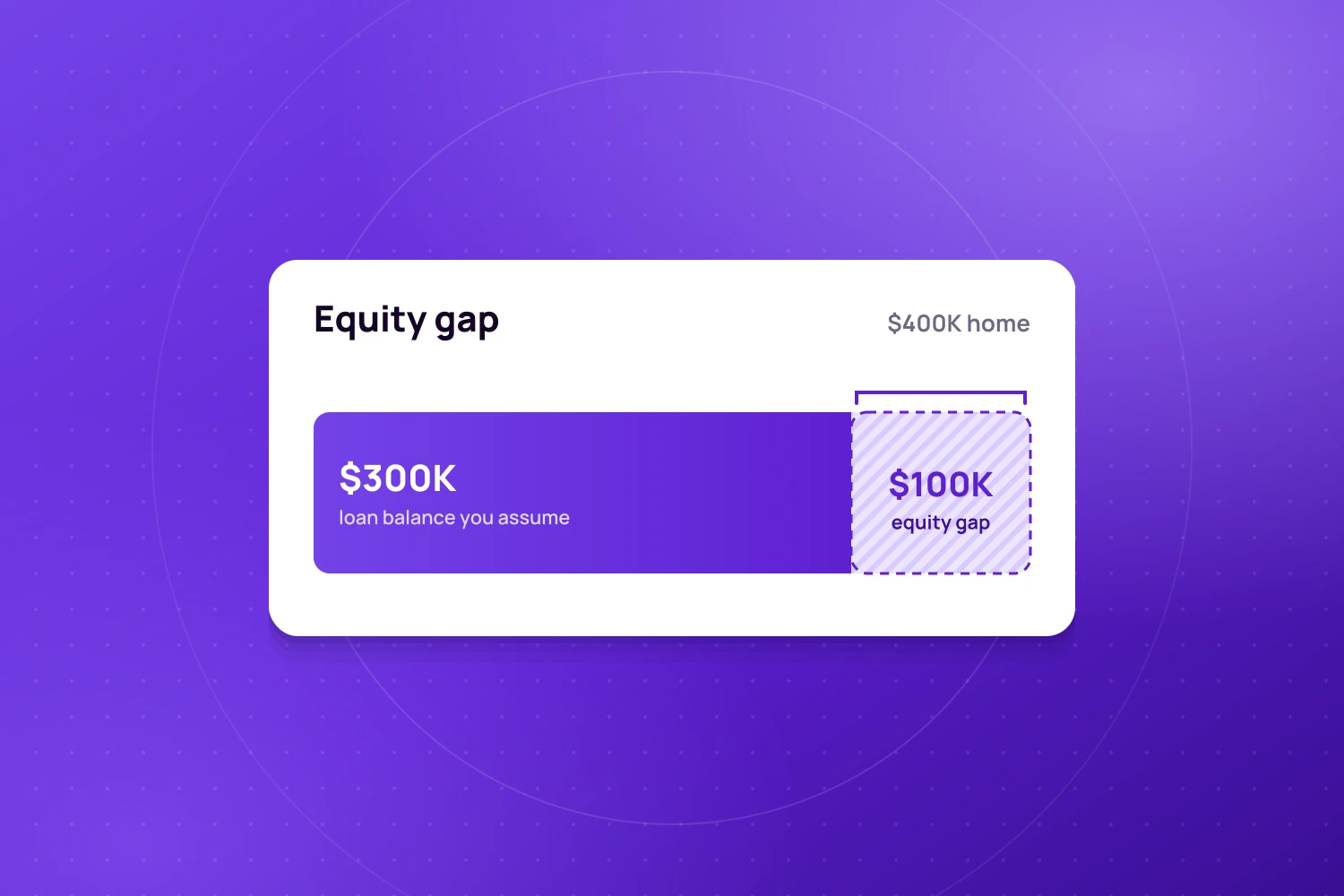
The buyer qualifies with the servicer on income, credit, and DTI. For VA loans specifically, VA Circular 26-23-27 mandates servicers process a complete assumption application within 45 days of receipt and cannot decline to process. The equity gap (the difference between purchase price and remaining balance) needs to be bridged with cash or a second loan. That's the main friction point.
For a deeper look at the mechanics, including how the equity gap works and where each loan type differs, read our full breakdown of the differences between portable and assumable mortgages.
The Key Distinction
Emmanuel Santa-Donato, SVP and chief market analyst at Tomo Mortgage, put it directly: "Assumability stays with the house. Portability stays with you." Assumption requires a buyer to want the specific house with the low-rate loan attached. Portability would let the homeowner move the loan to any new home. Different mechanisms, different benefits.
Conventional conforming loans, the Fannie/Freddie-backed loans that represent the majority of the market, are not assumable. They carry due-on-sale clauses requiring full payoff at sale. That is what the MOVE Act is trying to solve for, and why it matters if it eventually passes.
Why We Built Assumable.io
We built Assumable.io, the first-of-its-kind marketplace for assumable mortgages, because the transfer mechanism already exists and buyers had no practical way to find it. The gap between "evaluating" and "live" for portable mortgages is measured in years. Assumable homes are searchable today on Assumable.io.
Homeowners with FHA and VA loans are often sitting on assumable assets they don't know they have, in a market where that asset has real dollar value to a buyer. If that's you, read how to sell a home with an assumable mortgage.
Frequently Asked Questions
Are portable mortgages real?
Not yet in the United States for conventional loans. H.R. 10028 (the MOVE Act) proposes creating them, and FHFA is evaluating the concept, but no portable mortgage product exists for conventional loans as of late 2026. FHA, VA, and USDA loans have a related feature (assumability) that works differently but is available now.
Can I transfer my mortgage to a new house?
Not with a conventional loan. Due-on-sale clauses require full payoff at sale. If you have an FHA, VA, or USDA loan, you can't move it to a new house yourself, but a buyer can assume it on the existing property. The MOVE Act would change this for future conventional loans if enacted.
What is the MOVE Act?
H.R. 10028, introduced August 3, 2026 by Rep. Thomas Kean Jr. (R-NJ-7). It would require Fannie Mae and Freddie Mac to begin buying and securitizing portable conventional mortgages within 180 days of enactment. As of late 2026, the bill has been referred to the House Financial Services Committee with no hearing, markup, or vote scheduled.
What is the difference between a portable mortgage and an assumable mortgage?
Emmanuel Santa-Donato of Tomo Mortgage defined it well: "Assumability stays with the house. Portability stays with you." With an assumable mortgage, the buyer takes over the seller's existing loan on that specific property. With a portable mortgage, the borrower moves their own loan to a new property. Both transfer a below-market rate, but through different mechanisms, and only assumption exists in the U.S. today.
Key Takeaways
The legislative calendar is what it is. H.R. 10028 is in committee. FHFA is evaluating. Neither is a product a homeowner can use this week. But roughly half the outstanding mortgages in this country carry rates that look extraordinary from where rates sit today. For the portion of those loans that are FHA, VA, or USDA, that rate is already transferable to the right buyer under the right conditions. Most homeowners with those loans don't know it. Most real estate professionals don't flag it. That's the gap.
If you're trying to understand the mechanics, our portable vs. assumable mortgage breakdown covers the full comparison. If you're ready to look, search assumable homes on Assumable.io.
Congress is debating whether to build something new. The thing that already works is sitting in loan portfolios across the country, waiting for someone to explain it clearly.