.svg)


Learn how anyone can assume a VA loan
An assumable mortgage lets you take over a seller's existing FHA, VA, or USDA loan, including their interest rate, remaining balance, and monthly payment. With 16-20 million assumable homes in the U.S., buyers can lock in rates as low as 2.5-3%.
Key takeaways
Assumable Mortgage: How to Inherit a Seller's Low Rate and Save $240,000+
Executive Summary
- Bottom Liner: An assumable mortgage lets you take over a seller's existing FHA, VA, or USDA loan, including their interest rate, remaining balance, and monthly payment. With 16-20 million assumable homes in the U.S., buyers can lock in rates as low as 2.5-3%.
- Data insight: Our analysis of 312,367+ mortgages reveals that over 80% of existing mortgages carry rates below 6%, and nearly 25% carry rates under 3%. States like Alaska (39.3%), Wyoming (34.4%), and Virginia (34.1%) have the highest concentrations of assumable loans.
- Savings calculation: A $350,000 loan at 3% costs $1,476/month. The same loan at today's 6.19% rate costs $2,143/month. That's $667 saved every month, $8,004 every year, and $240,120 over the life of the loan.
- Next step: Search our 42,631+ active assumable listings to find properties with rates locked in during 2020-2022 when 30-year rates were under 4%.
A $350,000 loan at today's 6.19% rate costs $2,143/month. The same loan at 3%? Just $1,476. That's $667 saved every month, $8,004 every year, locked in for the life of the loan. Not a typo. Not a gimmick. Just a loan type most people have never heard of, attached to homes most platforms don't highlight.
Assumable mortgages let you inherit a seller's low-rate FHA, VA, or USDA loan instead of taking out new financing at today's rates. With 20-25% of U.S. mortgages falling into these assumable categories, that translates to 16-20 million homes where buyers can step into someone else's 2020 or 2021 rate. The challenge has always been finding them.
What Is an Assumable Mortgage?
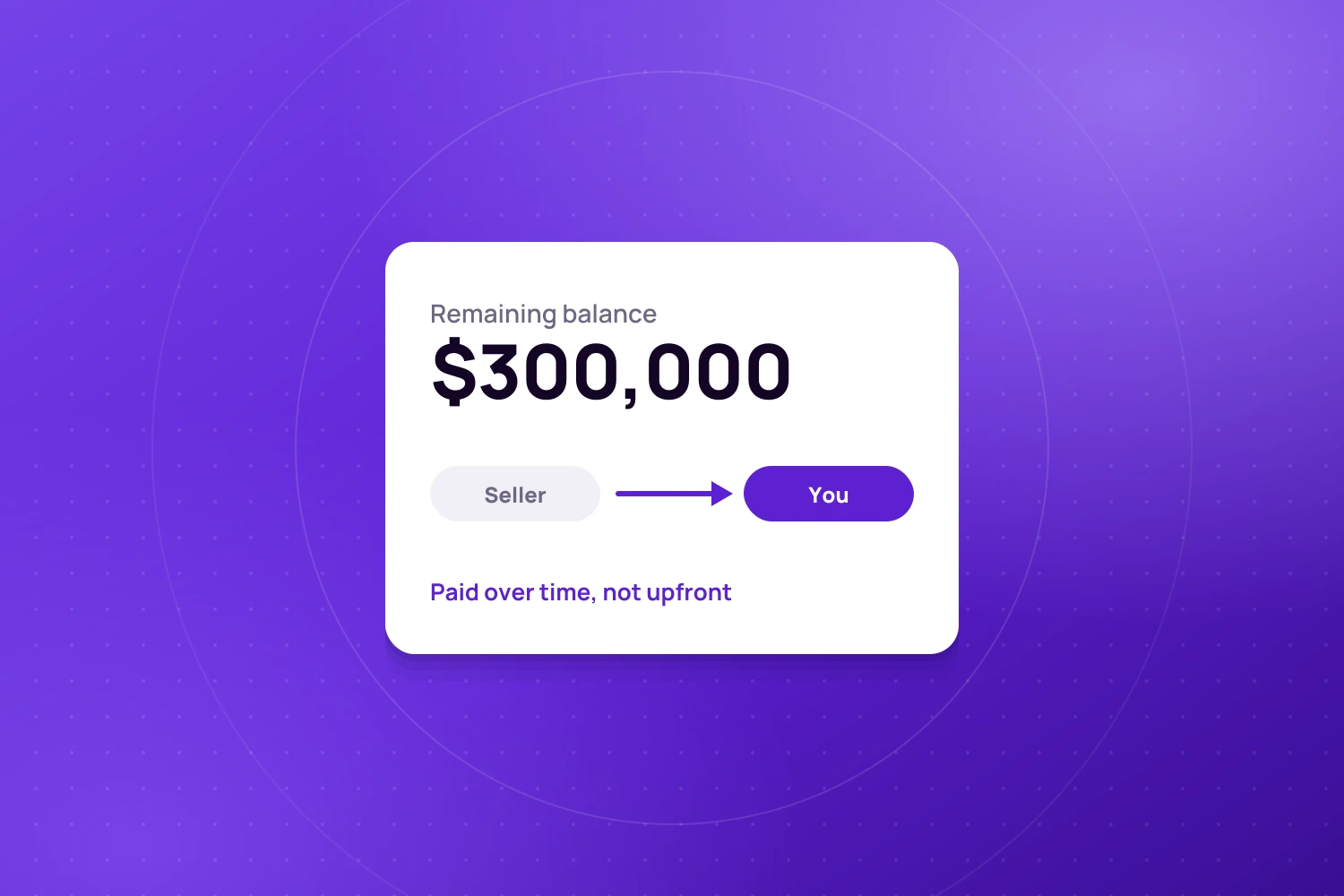
An assumable mortgage is a home loan that allows a buyer to take over the seller's existing mortgage, including its interest rate, remaining balance, and monthly payment. Only FHA, VA, and USDA loans are assumable. Conventional mortgages are not. To assume a loan, buyers must qualify with the lender based on credit score, income, and debt-to-income ratio (DTI).
What Actually Transfers (and What Doesn't)
When you assume a mortgage, you get the seller's interest rate, remaining term, and loan balance. You do not get their down payment or the equity they've built. Think of it like buying a car with a transferable 0% financing deal still attached. The original owner got the great rate. You step into their shoes and keep their terms.
Here's the critical distinction most people miss: "assumable" does not mean "easy to get." The seller's mortgage servicer reviews your credit, income, and DTI ratio just like any new mortgage application. You're not bypassing underwriting. You're simply inheriting better terms if you qualify.
Why This Matters Now
The 30-year fixed mortgage rate averaged 6.19% as of December 4, 2025, according to Freddie Mac. A year ago, it was 6.69%. Meanwhile, nearly 25% of existing mortgages carry rates under 3% (Redfin data). Inheriting a 3% rate instead of financing at 6.19% means saving 37%+ on monthly payments compared to new financing.
ScenarioInterest RateMonthly PaymentAnnual CostAssumed Mortgage3.0%$1,476$17,712New Mortgage (6.19%)6.19%$2,143$25,716Your Savings-$667/mo$8,004/yr
Three types of government-backed loans allow assumptions. Each works a little differently.
FHA, VA, and USDA Loans: Which Ones Are Assumable and How They Differ
Only government-backed loans are assumable. Conventional mortgages backed by Fannie Mae or Freddie Mac are not. FHA loans account for approximately 13% of all mortgages, while VA loans represent about 11%, according to the Washington Post. Combined with USDA loans, roughly 20-25% of U.S. mortgages fall into these assumable categories.
FHA Loans
All FHA loans originated after December 15, 1989 are assumable with lender approval. FHA accounts for 40%+ of low-down-payment originations in 2025, making it the largest source of assumable mortgages.
- Who can assume: Anyone who meets qualification requirements
- Credit score: Minimum 580 for standard DTI; 500-579 requires stricter review
- DTI requirement: Typically 43% or below
- Timeline: 30-90 days per HUD guidelines
The Federal Housing Administration issued 5,861 assumable mortgages in 2024, up 127% from 2,578 in 2022 (Homes.com data). The surge signals growing buyer awareness.
VA Loans: The Biggest Misconception
Anyone can assume a VA loan, not just veterans. This is the #1 myth about VA assumptions. Civilians, non-military buyers, anyone who meets credit and income requirements can assume a VA loan.
- Who can assume: Anyone who qualifies (veterans and non-veterans alike)
- VA funding fee: 0.5% of the loan balance (veterans exempt from standard VA funding fee are also exempt here)
- Timeline: VA mandates 45-day processing from complete documentation
- Entitlement consideration: If a non-veteran assumes, the original veteran's entitlement stays tied up until loan payoff
USDA Loans
USDA loans are assumable in rural and suburban designated areas. Buyers must meet USDA income limits for the property location, and the property must still meet USDA eligibility requirements.
Loan TypeWho Can AssumeTypical TimelineKey RequirementFHAAnyone who qualifies30-90 days580+ credit, 43% DTIVAAnyone (not just veterans)45+ daysLender approval, 0.5% feeUSDAAnyone in eligible areaVariesIncome limits, rural area
For a deeper dive on VA assumptions, including how civilian buyers can assume with no military connection, learn how anyone can assume a VA loan.
Understanding which loans qualify is step one. Here's exactly what happens from offer to closing.
The Step-by-Step Assumption Process
Assuming a mortgage follows a predictable path, but it takes longer than traditional purchases. Traditional purchases close in approximately 30 days. Assumptions take 45-90 days. Plan accordingly.
Step 1: Find an Assumable Property
Major platforms like Zillow, Redfin, and Realtor.com don't flag assumable loans prominently. This is the market gap. You need to look for FHA, VA, or USDA loan indicators in listing details, or work with an agent who understands assumptions. Better yet, use a platform that filters for assumable properties specifically.
Step 2: Verify the Loan Is Assumable and in Good Standing
Request loan details from the seller: current rate, remaining balance, monthly payment, and origination date. Confirm the loan is current with no missed payments or default status. For pre-1989 FHA loans, different rules apply (many are fully assumable without qualification).
Step 3: Calculate the Equity Gap
The equity gap is the difference between the home's purchase price and the remaining loan balance. This gap must be covered by cash, seller financing, a second mortgage, or a HELOC (home equity line of credit).
Example: $450,000 home with $320,000 loan balance = $130,000 equity gap. You need $130,000 beyond the assumed loan to complete the purchase.
Step 4: Submit the Assumption Application
Contact the current loan servicer (not necessarily the original lender). Provide income verification, credit report authorization, employment history, and asset documentation. Expect to pay a processing fee of $500-$1,000, plus the VA 0.5% funding fee if applicable.
Step 5: Underwriting and Approval
The servicer reviews your creditworthiness using the same standards as a new loan application. FHA assumptions typically take 30-90 days per HUD. VA mandates 45-day processing from complete documentation.
Step 6: Closing
Execute the assumption agreement. The seller receives a release of liability (meaning the original borrower is no longer responsible for the loan). You become the legal borrower, and the rate and terms transfer to your name.
- Find an assumable property
- Verify the loan is assumable and in good standing
- Calculate and plan for the equity gap
- Submit assumption application to the loan servicer
- Complete underwriting review (30-90 days)
- Close and assume the loan
Before making an offer, calculate your potential savings to see exactly how much you'll save monthly and over the loan's life.
The process is straightforward, but there are pitfalls that trip up unprepared buyers.
Common Pitfalls and How to Avoid Them
Assumptions come with real challenges. Acknowledging them upfront prevents frustration and failed transactions.
Pitfall 1: The Equity Gap Surprise
Sellers with 3% rates have often built significant equity. If you're not prepared to bring $50,000-$150,000+ to closing, you may need secondary financing. Second mortgage rates may be higher than primary rates, eating into savings.
Fix: Calculate the gap before falling in love with a listing. Run the numbers first.
Pitfall 2: Servicer Delays and Inexperience
Many servicers process few assumptions. Staff may be unfamiliar with the process. The 127% surge in assumptions means servicers are still scaling up.
Fix: Get the servicer name early. Check their assumption process before making an offer.
Pitfall 3: Verification Failures
Not all government loans are assumable. Some sellers aren't current on payments. Refinanced loans may have changed from FHA/VA to conventional.
Fix: Verify loan type and origination date. Request loan documents.
Pitfall 4: VA Entitlement Complications
If a civilian assumes a VA loan, the veteran's entitlement stays tied up until loan payoff. The veteran can't use their full VA benefit for their next home purchase.
Fix: If you're a veteran assuming from another veteran, your entitlement can substitute.
Pitfall 5: Unrealistic Timeline Expectations
Sellers in a hurry may choose a faster conventional buyer. Some sellers don't understand the process and get cold feet.
Fix: Educate the seller. Offer other incentives like a higher price or flexibility on closing date.
Pre-Offer Checklist
- Gap financing secured or calculated
- Servicer contacted and responsive
- Loan type verified as assumable
- Seller understands timeline
- Loan in good standing confirmed
With 16-20 million assumable homes in the U.S., finding them shouldn't be the hard part. Until now, it was.
Why Assumable Listings Are Hard to Find (And How Assumable.io Solves It)
Major platforms don't have "assumable loan" as a searchable filter. MLS listings rarely highlight loan type prominently. Agents often don't know to market assumable status as a selling point. Buyers must manually research each listing's loan type, which is impractical at scale.
The Information Gap
Even when a listing mentions FHA, VA, or USDA, key details are missing: current rate, remaining balance, monthly payment. Savings calculations require math most buyers won't do listing-by-listing. No centralized database existed to surface assumable inventory.
How Assumable.io Solves This
Think of it this way: it's like knowing there are thousands of cars with transferable 0% financing deals, but no website lets you filter for them. You'd have to call every dealership individually. Assumable.io built that filter.
- Dedicated search: 42,631+ active listings specifically identified as assumable
- Data depth: Analysis of 312,367+ mortgages, providing rate, balance, and payment details
- Savings calculations built in: See exactly how much you'd save vs. current market rates
- Market coverage: Listings across all 50 states and thousands of cities
The scale of opportunity is substantial. Over 80% of mortgages carry rates below 6%. Nearly 25% carry rates under 3%. Yet most of this inventory remains invisible on traditional platforms.
Real Savings: What Assuming a Mortgage Actually Saves You
Let's put real numbers on what you could save.
Example 1: Standard Scenario
MetricAssumed (3%)New Loan (6.19%)SavingsLoan Amount$350,000$350,000-Monthly Payment$1,476$2,143$667/moAnnual Cost$17,712$25,716$8,004/yr30-Year Total Interest$181,360$421,480$240,120
Example 2: Higher Rate Comparison
Using a 7% comparison rate (recent highs), the same $350,000 loan at 3% costs $1,476/month. At 7%, it costs $2,329/month. Monthly savings: $853. Annual savings: $10,236.
Regional Opportunities
States with higher concentrations of VA and FHA loans offer more assumption opportunities. Based on Realtor.com data:
- Alaska: 39.3% assumable share
- Wyoming: 34.4%
- Virginia: 34.1%
- Nevada: 32.8%
- Oklahoma: 32.5%
- Maryland: 32.1%
Explore assumable opportunities in your area to find listings with lower equity gaps and faster-processing servicers.
Next Steps
Assumable.io exists because this opportunity was invisible for too long. We've analyzed 312,367+ mortgages to surface the homes where buyers can lock in rates from 2020, 2021, and 2022, when 30-year rates were under 4%. Those rates are still out there, attached to homes people are selling today.
- Search: Browse Assumable.io's 42,631+ active listings filtered by your location, price range, and rate threshold
- Calculate: Use the assumable mortgage calculator to see exact monthly and lifetime savings on any property
- Prepare: Get pre-qualified with a lender experienced in assumptions. Gather documentation (income, credit, assets)
- Connect: Work with an agent who understands the assumption process
In a market where rates above 6% feel permanent, assumable mortgages offer a legal path to the past. The math is simple: a 3% rate on a $350,000 loan saves you $667/month. That's $240,000 over the loan's life. It's just a loan type most people have never heard of, attached to homes most platforms don't highlight. Now you know.